
By clicking Get my free quote, I give Hutchings Enterprises Inc (33° North Insurance Group) and its licensed agents my prior express written consent, by electronic signature, to contact me with calls and text messages — including marketing calls and texts made using automated technology or an artificial or prerecorded voice — and by email, at the number and email I provided, about my insurance quote and related insurance products and services, even if my number is on a Do Not Call list. My information is never sold or shared with other agencies for their own marketing. Consent is not a condition of purchase; I can call (972) 987-0650 instead. Message frequency varies. Message and data rates may apply. Reply STOP to opt out, HELP for help. I agree to the Privacy Policy and Terms of Use, including the arbitration clause and E-SIGN consent.
You found the apartment near the Tollway, or a townhome a few minutes from the office, and the leasing agent hands you a move-in checklist: deposit, keys, utilities, and proof of renters insurance before you can move in. Or maybe you've rented in Frisco for years and never bought a policy because nobody asked.
Either way, the questions are the same: what renters insurance covers, what your landlord is asking for, and what happens to your things when hail, a hard freeze or a flash flood hits. We're an independent agency on Warren Parkway in Frisco, and setting up renters policies that fit a lease is everyday work for us.
Who rents in Frisco, and why does renters insurance come up so often?
The short answer: About a third of Frisco's occupied homes are rented, the median gross rent is $2,014 a month, and the number of renter households more than doubled between 2010 and 2020, so lease insurance clauses touch a lot of Frisco families.
Most Frisco households own their homes, but the rental side is large and growing. The Census Bureau's QuickFacts for Frisco puts the owner-occupied housing rate at 65.9% (American Community Survey, 2020–2024), which means roughly one in three occupied homes is rented. The same source puts the median gross rent at $2,014 a month.
Frisco's rentals run from garden-style and urban apartment communities to townhomes and single-family houses leased by individual owners. The same city plan projects far more new "urban living" units to buildout (about 38,241) than new detached (about 6,905) or attached (about 7,337) single-family homes, so the denser parts of Frisco are still being built.
The kind of rental shapes what you'll be asked for. A managed apartment community usually has a standard insurance clause in every lease; an individual owner renting out a townhome may ask for the same thing, something different or nothing at all. And budgets are tight: the city's plan, citing 2023 Census survey data, notes that 45.8% of Frisco renter households spend 30% or more of their income on housing. Replacing a household of belongings out of pocket is a hit most families would rather insure.
What does renters insurance cover in Frisco?
The short answer: Three things: your belongings, your personal liability if you hurt someone or damage their property, and extra living expenses if a covered loss makes your home unlivable.
The Texas Department of Insurance's renters insurance tips (updated December 10, 2025) describe a renters policy as typically including personal property coverage, additional living expenses if you have to leave your home for a while, and personal liability protection. Here's how those pieces line up for a Frisco renter:
| Coverage | What it pays for | A Frisco example |
|---|---|---|
| Personal property | Your furniture, clothes, electronics and other belongings when a covered cause of loss damages or destroys them, minus your deductible. | A kitchen fire in your apartment ruins the couch, the TV and the clothes in the next room. |
| Personal liability | Claims against you when you're legally responsible for injuring someone or damaging their property, up to your limit. | Your bathtub overflows and water damages the unit below. |
| Additional living expenses (loss of use) | The extra cost of living somewhere else while your home is repaired after a covered loss. | A covered fire leaves your townhome unlivable for a month, and you need a hotel or short-term rental. |
| Special limits | Lower caps on certain property. TDI lists common examples: $100 for cash, $2,500 for business-use items and $500 for jewelry and watches. | A stolen engagement ring may be worth far more than a $500 cap, so it may need extra coverage. |
On many policies your belongings are covered away from home too, such as a laptop stolen from a car, subject to the policy's terms and limits. The car itself is never part of a renters policy. And for families with college students, TDI notes that a dependent's belongings may be covered by the parents' homeowners policy, usually up to 10% of its personal property coverage, though a landlord may still want a policy in the renter's own name.
What doesn't renters insurance cover?
The short answer: The building, flood damage, your car, and usually an unrelated roommate's belongings, plus anything above the special limits on cash, jewelry and business property.
Knowing the gaps matters as much as knowing the coverage. These are the ones we explain most often:
- The building itself. Walls, floors, the roof and built-in appliances belong to the owner, and the owner's policy covers them. Your policy covers your things and your liability.
- Flood. TDI says most renters policies don't cover flood losses. Water rising from a creek, a drainage channel or a flooded street needs a separate flood policy.
- Your car. Hail dents, a break-in that damages the car and a parking-lot fender bender are auto insurance questions.
- Above the special limits. Cash, jewelry and business equipment have low caps on many policies. TDI suggests asking your agent about more coverage for expensive items.
Why do Frisco landlords ask for renters insurance and proof of liability coverage?
The short answer: Texas law doesn't require renters insurance, but a lease can, and many Frisco apartment communities ask for a minimum liability limit, proof before move-in and to be listed as an interested party on your policy.
TDI's guidance is that renters insurance isn't required by law, but some landlords may require a policy. We didn't find a Texas statute that sets the requirement; it comes from the lease you sign. So the details live in your lease, and the time to read its insurance clause is before you sign, not on move-in day.
Why do landlords ask? The owner's policy protects the building and the owner, not you. If a pan fire in your kitchen spreads to the unit next door, or a forgotten bath floods the apartment below, your renters policy's liability coverage can pay if you're legally responsible, up to your limit. A landlord who requires it is making sure there's a policy behind every unit.
Lease insurance clauses vary, but they usually ask for some combination of these:
- A minimum personal liability limit
The lease names a dollar amount, and your liability limit has to meet or beat it.
- Proof before move-in
Usually a declarations page showing your name, the address, the policy dates and your liability limit.
- The landlord as an "interested party"
The owner or management company gets notice if your policy is canceled, lapses or changes. It generally gets no coverage and can't make a claim on your policy.
- Coverage for the whole lease
The policy has to stay in force through the lease term. A lapse can put you out of compliance with your lease.
Interested party is not the same as additional insured. An additional insured is someone the policy actually covers; an interested party only gets notices. If your lease asks for anything beyond interested-party status, ask us before you buy, because not every renters policy can do it. And if your community offers its own liability program, ask who it protects: a program built for the landlord may do nothing for your belongings or a hotel bill after a fire.
By clicking Get my free quote, I give Hutchings Enterprises Inc (33° North Insurance Group) and its licensed agents my prior express written consent, by electronic signature, to contact me with calls and text messages — including marketing calls and texts made using automated technology or an artificial or prerecorded voice — and by email, at the number and email I provided, about my insurance quote and related insurance products and services, even if my number is on a Do Not Call list. My information is never sold or shared with other agencies for their own marketing. Consent is not a condition of purchase; I can call (972) 987-0650 instead. Message frequency varies. Message and data rates may apply. Reply STOP to opt out, HELP for help. I agree to the Privacy Policy and Terms of Use, including the arbitration clause and E-SIGN consent.
Should you choose replacement cost or actual cash value, and what deductible?
The short answer: Replacement cost pays what it takes to buy new, while actual cash value pays what your used things are worth today; replacement cost costs more but leaves you far less to make up after a loss. Pick a deductible you could pay tomorrow.
This is the choice that decides how much a claim actually pays. TDI's renters tips use a laptop to show it: a basic policy may pay a depreciated amount, so a $1,300 laptop that now sells for $500 would be paid at $500. A replacement-value policy costs more, but it covers the cost of replacing the item. TDI's advice is to make sure your policy will pay to replace your personal property.
- With actual cash value, the claim pays roughly the used value minus the deductible: about $6,000, leaving you around $12,000 short of replacing what you had.
- With replacement cost, the claim pays the cost to replace minus the deductible: about $17,000. Many policies pay the depreciated amount first and the rest once you replace the items.
Deductibles. The deductible is the part of a covered loss you pay before the policy pays. A higher deductible usually lowers your premium. Pick one you could cover from savings on a bad week; renters insurance is built for the bigger losses, not a cracked TV.
What happens when hail, a freeze or a flood hits a Frisco rental?
The short answer: Hail damage to your car is an auto comprehensive claim; water from a pipe that bursts inside your home is generally a renters claim for your belongings; and water rising from outside needs a separate flood policy.
North Texas weather is why these lines matter. Texas had 902 major hail events (hailstones one inch or larger) in 2025, the most of any state, out of 5,432 nationwide, per the Insurance Information Institute's tally of NOAA Storm Prediction Center data.
Hail and wind
If hail or wind breaks a window and damages your belongings inside, that's generally a renters claim, since wind and hail are covered causes of loss on most renters policies. The window and the roof are the owner's to fix. Your car in the lot is a different policy entirely: TDI's auto insurance guide lists hail among the damage comprehensive coverage pays for, so a liability-only auto policy leaves hail dents for you to pay. Our guide to car insurance in Frisco covers that side.
Freezes and burst pipes
The February 2021 winter storm showed how much damage frozen pipes can do. TDI's data call found that insurers had received 511,473 claims from that storm as of June 30, 2022, had paid $8.8 billion, and expected to pay about $11.5 billion in total (TDI, June 2022). TDI's article on burst pipes says a lot of that damage was caused by water from broken pipes, and adds a line every renter should know: if you rent, the owner's policy won't cover your furniture, electronics, clothing or other personal items.
TDI's advice: if you have a leak, turn the water off at the main and move expensive items off the floor, because your insurer may deny your claim if you don't protect your property. In an apartment without access to the shutoff, call the maintenance emergency line right away, then photograph the damage.
Flood
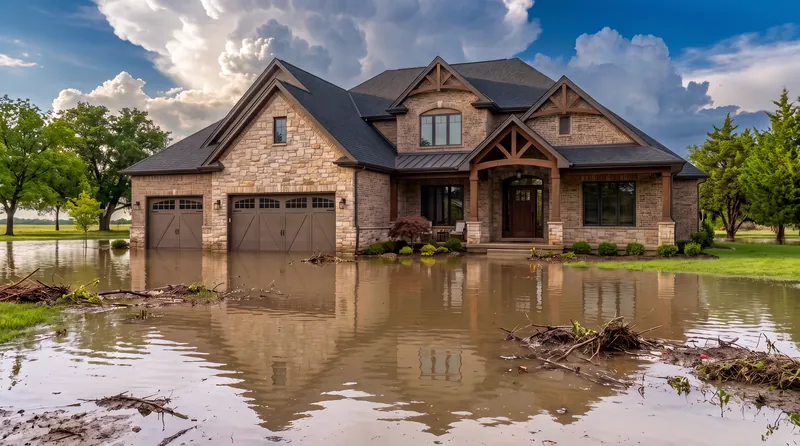
TDI's burst-pipe article draws the line plainly: home and renters insurance only cover leaks that happen inside your home, and they don't cover flood damage. The City of Frisco participates in the National Flood Insurance Program, which means renters here can buy NFIP flood coverage. FEMA's renters brochure (March 2024) says contents coverage in rental units can cover up to $100,000 of tenant-owned property, and that NFIP policies have a 30-day waiting period after purchase before they take effect.
In a ground-floor unit, or near one of Frisco's creeks or drainage channels, a contents-only flood policy is worth pricing before storm season, not after a forecast. The city's Engineering Services Department (972-292-5400) answers floodplain map questions, and our flood insurance page explains the options.
How much renters insurance do you need, and what does it cost?
The short answer: Enough personal property coverage to replace everything you own, liability at or above your lease's minimum, and a deductible you can afford; TDI puts the average Texas renters policy at about $20 a month, which is an average, not a quote.
Personal property. Walk through your home room by room and add up what it would cost to replace everything new: furniture, mattresses, clothes, kitchen gear, electronics, kids' things. It adds up faster than most people expect. Take photos or a short video as you go and store them off your phone; that inventory makes a claim much easier.
Liability. Start with the lease minimum, then think about what a lawsuit could reach: savings, future wages, a house you plan to buy. Price a higher limit side by side with the lease minimum.
How much coverage
More personal property and liability coverage costs more. Match both to what you own and what your lease asks.
Replacement cost or ACV
TDI notes a replacement-value policy costs more than one that pays a depreciated amount.
What you pay first
A higher deductible usually lowers the premium. Choose one you could pay tomorrow.
Valuables and add-ons
Extra coverage for jewelry, collectibles or business equipment raises the price, and may be worth it.
What it costs. TDI says the average renters policy in Texas costs about $20 a month. That's a statewide average, not anyone's rate; your price depends on the company, your address and the choices above.
Bundling with auto. Many insurers offer a discount when the same company writes your renters and auto policies. It may help, but eligibility and discounts vary, and the bundle isn't always the lower total. We compare options from multiple insurance companies, with and without the bundle, so you can see the difference in dollars. Our auto insurance page covers the car side.
The bottom line
Renters insurance in Frisco comes down to a few decisions: replacement cost for your belongings, a liability limit at or above what your lease asks, a deductible you could actually pay, and an honest look at the two things a renters policy won't handle, flood and your car.
Your landlord's insurance protects the building. Your renters policy is the one that protects your things, your liability and your place to stay after a covered loss.
If you'd like help, send us your ZIP below or call Robert at (972) 987-0650, Monday through Friday from 9 to 5 Central. Bring your lease, and we'll match its insurance clause, set your coverage at replacement cost and compare options from multiple insurance companies. You can also start on our renters insurance page or go straight to a free renters quote.
By clicking Get my free quote, I give Hutchings Enterprises Inc (33° North Insurance Group) and its licensed agents my prior express written consent, by electronic signature, to contact me with calls and text messages — including marketing calls and texts made using automated technology or an artificial or prerecorded voice — and by email, at the number and email I provided, about my insurance quote and related insurance products and services, even if my number is on a Do Not Call list. My information is never sold or shared with other agencies for their own marketing. Consent is not a condition of purchase; I can call (972) 987-0650 instead. Message frequency varies. Message and data rates may apply. Reply STOP to opt out, HELP for help. I agree to the Privacy Policy and Terms of Use, including the arbitration clause and E-SIGN consent.
Frisco renters insurance FAQ
Is renters insurance required in Frisco, TX?
Not by law, but often by your lease. The Texas Department of Insurance says renters insurance isn't required by law, but some landlords may require a policy. Many Frisco apartment communities write it into the lease, usually with a minimum personal liability limit, proof of coverage before move-in and a request to list the landlord or management company as an interested party. Read the insurance clause before you sign. Even when a lease doesn't require it, your landlord's insurance won't cover your belongings.
How much does renters insurance cost in Frisco?
The Texas Department of Insurance says the average renters policy in Texas costs about $20 a month. That's a statewide average, not a quote. Your price depends on the company, your address, how much personal property and liability coverage you choose, your deductible, and whether the policy pays replacement cost or actual cash value. Bundling renters with your auto policy may lower your total with some companies, though discounts vary. To see your number, compare quotes at the same coverage.
What does "interested party" mean on a renters insurance policy?
It means your landlord or property manager is listed on your policy so it gets notified if the policy is canceled, lapses or changes. That lets the landlord confirm you're keeping the coverage your lease requires. Being an interested party generally doesn't give the landlord any coverage or the right to make a claim on your policy. It's different from an additional insured, which is someone the policy actually covers. If your lease asks for more than interested-party status, ask your agent before you buy.
Does renters insurance cover a burst pipe in a Texas freeze?
Generally yes, for your belongings, when the water comes from a pipe that bursts inside your home, subject to your policy's terms. The Texas Department of Insurance notes that if you rent, the owner's policy won't cover your furniture, electronics, clothing or other personal items, so your renters policy is the one that responds. TDI also advises turning the water off at the main and moving expensive items off the floor, because an insurer may deny a claim if you don't protect your property.
Does renters insurance cover flooding?
No. The Texas Department of Insurance says most renters policies don't cover flood losses, and home and renters insurance only cover leaks that happen inside your home. Renters can buy contents coverage through the National Flood Insurance Program, and the City of Frisco participates in the NFIP. FEMA's renters brochure says contents coverage can insure up to $100,000 of tenant-owned property, and NFIP policies have a 30-day waiting period after purchase. If you live on a ground floor or near a creek, price it before storm season.
Does my renters insurance cover my roommate's belongings?
Usually not. Renters policies cover the named insured and household members as the policy defines them, which typically means relatives who live with you. An unrelated roommate's furniture, clothes and electronics generally aren't covered by your policy, and your liability coverage may not protect them either. Some insurers allow a roommate to be added, but many don't. The cleanest setup is for each roommate to carry a separate policy that meets the lease's insurance clause.
Last reviewed by Robert Hutchings on .